Gifts for Home Bookbinders
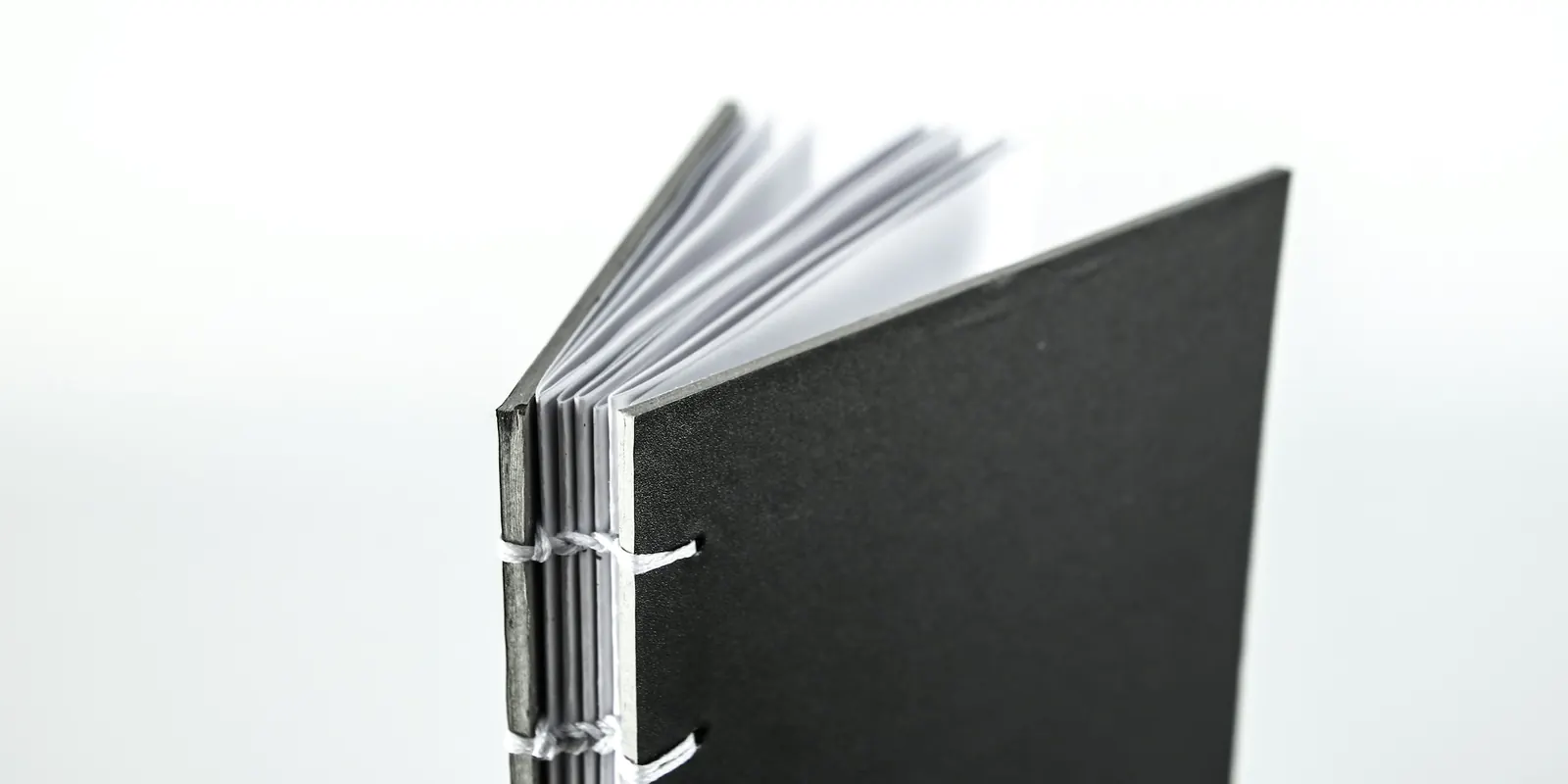
Run a finger down the fold of a book they made. Every hole was a choice somebody had to get right before the thread went through. Once you see that, even a blank book has quite a story. This guide to gifts for bookbinders follows a book from loose paper to a pressed hardcover.
See also: Writers and journalers Book lovers Artists Sewing and quilting
Before you buy
- Ask what they bind now. Someone sewing simple pamphlets needs a cradle, an awl and thread; someone already making hardcovers will get more from cloth, board and a press.
- Keith Smith's Non-Adhesive Binding books are the classic set for learning. In November 2026, Amazon only had a marked-up copy of Volume 1, at about twice its usual price. Buy it from a bookbinding supplier instead.
- Several picks here, like the Irish linen thread and the wheat starch, showed only a few left in stock in mid-November. Order those first.
No gifts match. Try another search or increase your budget.
If you buy one thing
-
Bookbinding Punching Cradle with Aluminum Piercing Guide and Awl
A wooden V-cradle holds each folded signature open while a metal guide sets the holes, so every stitch lines up and the spine stays straight. Match it to the size of book they like to make.
Paper and board 2 ideas
What the book is made of. Acid-free stock keeps pages and covers from turning yellow.
-
Lineco Neutral pH Binder Board, 0.08 Inch, Pack of 4
Stiff, dense board for hardcover covers. It is acid-free, so it will not yellow the pages it touches, and four big sheets make several books.
-
Canson Mi-Teintes Pastels Paper Pad, 9x12, Assorted Colors
Heavy colored paper with a soft texture, sold for pastel artists but loved by binders for soft covers and endpapers. Twenty-four colors give them plenty to try.
Folding and cutting 5 ideas
Crisp folds and square edges are what make a handmade book look finished.
-
Lineco Genuine Bone Folder Large 8" x 1"
A smooth, flat tool made of real bone that presses folds sharp without making the paper shiny. Binders keep one in hand all day, and a large one is easier to grip.
-
OLFA 9mm Stainless Steel Utility Knife (SVR-2)
A slim snap-blade knife that cuts board and paper cleanly along a ruler. Snapping off a dull segment gives a fresh edge, which matters when a ragged cut shows on every page.
-
WA Portman Metal Ruler 18'', Corkback
A long steel ruler with cork on the back so it does not slide under the knife. Plastic rulers get shaved by the blade; this one keeps a true edge.
-
OLFA 24 x 36 Inch Self-Healing Rotary Cutting Mat
A cutting surface big enough to cut a full sheet of book board in one pass. The grid lines help square up covers, and the surface closes up after each cut.
-
Dahle 534 Professional Guillotine Trimmer, 18"
A heavy German guillotine that cuts a stack of paper perfectly square in one stroke. For a binder making many books, it replaces hours of measuring and knife work.
Budget: Splurge $100+ See it on Amazon: Dahle 534 Professional Guillotine Trimmer, 18" (opens in a new tab)
Punching and sewing 3 ideas
Holes in the same spot on every signature, then strong thread pulled snug through them.
-
Lineco Medium Duty Awl, Fine Point
A fine, sharp point for piercing sewing holes through the fold. A thin hole lets the thread pull snug without tearing the paper, which a thick craft awl often does.
-
Lineco Bookbinding Stainless Steel Needles, Package of 5
Long, blunt needles with a big eye for thick waxed thread. Blunt tips follow the holes already pierced instead of snagging the paper.
-
Crawford Irish Waxed Linen Thread, 4-Ply, Black
Linen thread made in Northern Ireland, already waxed so it grips and does not tangle. About 100 yards sews a long stack of books, and black looks sharp on an exposed spine.
Glue and pressing 4 ideas
Thin glue, then time under weight. Rushing this step is how covers warp.
-
Lineco Neutral pH Adhesive, 8 oz
The archival PVA glue most binders use for spines and covers. It dries clear and stays flexible, so the book can open again and again without cracking.
Budget: Under $25 See it on Amazon: Lineco Neutral pH Adhesive, 8 oz (opens in a new tab) -
Lineco Pure Wheat Starch Adhesive, 2 oz
Powdered wheat starch that they cook into a smooth paste. It dries slower than PVA, which leaves time to slide paper into place, and it can be undone with water later.
-
Lineco Glue Brush, 3/4 Inch
A dense natural-bristle brush with no metal parts to rust in water-based glue. It spreads a thin, even coat, and thin glue is the secret to flat covers.
Budget: Under $25 See it on Amazon: Lineco Glue Brush, 3/4 Inch (opens in a new tab) -
Jupean Book Press 7.9 x 11.6 Inch
A wooden press with screw handles that holds a fresh book flat while the glue dries. It fits A5 books, the size most first projects are.
Budget: Under $25 See it on Amazon: Jupean Book Press 7.9 x 11.6 Inch (opens in a new tab)
Covers and finishing 3 ideas
The parts people see first: cloth, endpapers and a title on the spine.
-
Lineco Archival European Binder Cloth, Black, 17 x 26 Inch
Paper-backed book cloth that glues down smoothly without glue soaking through. This is the classic hardcover look, and one sheet covers a few books.
-
Jacquard Marbling Kit
Everything to float paint on thickened water and print swirled patterns onto paper. Hand-marbled endpapers are the inside cover that makes people ask where a book came from.
Budget: Under $25 See it on Amazon: Jacquard Marbling Kit (opens in a new tab) -
ZONEPACK ZS-100 Hot Foil Stamping Machine with 6mm Type Set
A heated press that stamps titles in gold or silver foil onto cloth and leather, using loose metal letters. It gives a handmade book a real spine title, the last thing that separates it from a shop book.
Books and repair 4 ideas
Guides by real binders, and a kit for saving books that are falling apart.
-
Bookbinding: A Step-by-Step Guide by Kathy Abbott
A clear, photo-heavy course by a working British binder, moving from simple pamphlets to case bindings and repairs. Good for the person ready to make a real hardcover.
-
Making Handmade Books: 100+ Bindings, Structures & Forms by Alisa Golden
Over a hundred structures, from accordion books to pop-ups, each with drawings. It is the book binders grab when they want a new shape to try.
-
Hand Bookbinding: A Manual of Instruction by Aldren A. Watson
An old, trusted manual with careful line drawings of every step and tool. It is inexpensive and covers sewing on tapes, which newer books often skip.
-
Lineco Bookbinding Repair Tool Kit
Repair tape, mending tissue, a bone folder, archival glue and a cleaning pad for fixing torn pages and loose spines. A good gift for a binder who rescues old books too.


How it comes together
- Find the paper's grain before cutting anything. Bend a sheet gently each way; it bends more easily along the grain, and the grain must run top to bottom, parallel to the spine.
- Fold the paper into signatures, small stacks of four or five sheets folded together. Crease each fold once with the bone folder, pressing from the middle out.
- Mark the sewing stations, the holes along the fold, on a strip of scrap paper. Use that strip as a template so every signature is pierced in the same places.
- Open each signature in the cradle and pierce the holes from the inside with the awl.
Sew the signatures together with waxed linen, linking each new one to the one below with a kettle stitch at the head and tail.
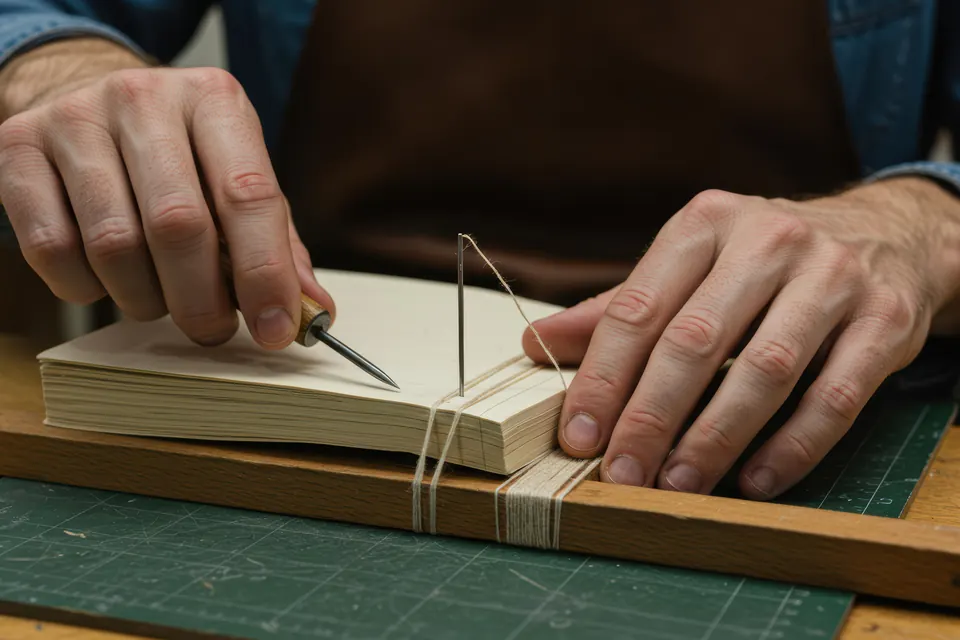
- Brush a thin coat of PVA on the spine, add a strip of cloth across it, and let it dry under light weight.
Cut the boards a little larger than the pages, cover them in cloth, and glue the book block in with the endpapers.
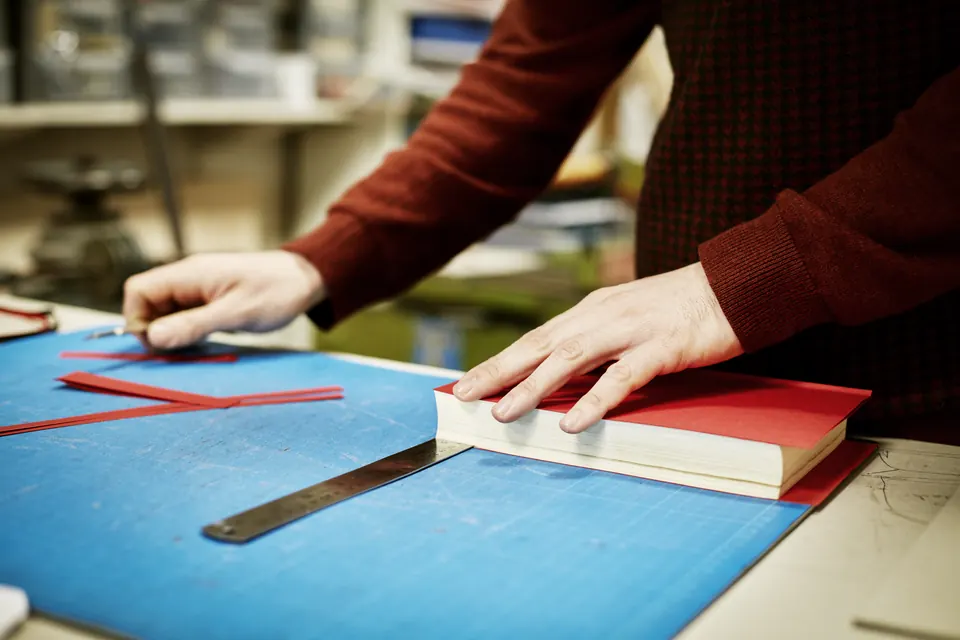
- Press the finished book overnight with wax paper inside each cover, so damp glue cannot stick the pages together.
Watch out for
- Paper folded against the grain cracks at the fold and makes the pages ripple. Plain letter paper folded in half runs the wrong way, so test the grain before buying a ream.
- PVA sets fast and cannot be undone. Wheat paste is slower and comes loose again with water, which is why people who repair old books choose it.
- Wet glue makes board and paper curl. Use thin coats, work quickly, and always let a book dry flat under weight.
- Thread pulled too hard tears the paper at the holes, and loose thread makes a wobbly book. Pull snug, along the line of the fold, not away from it.
- A guillotine blade is extremely sharp. Keep the blade locked down when it is not in use, and keep children away from it.