Gifts for Metal Detecting Fans
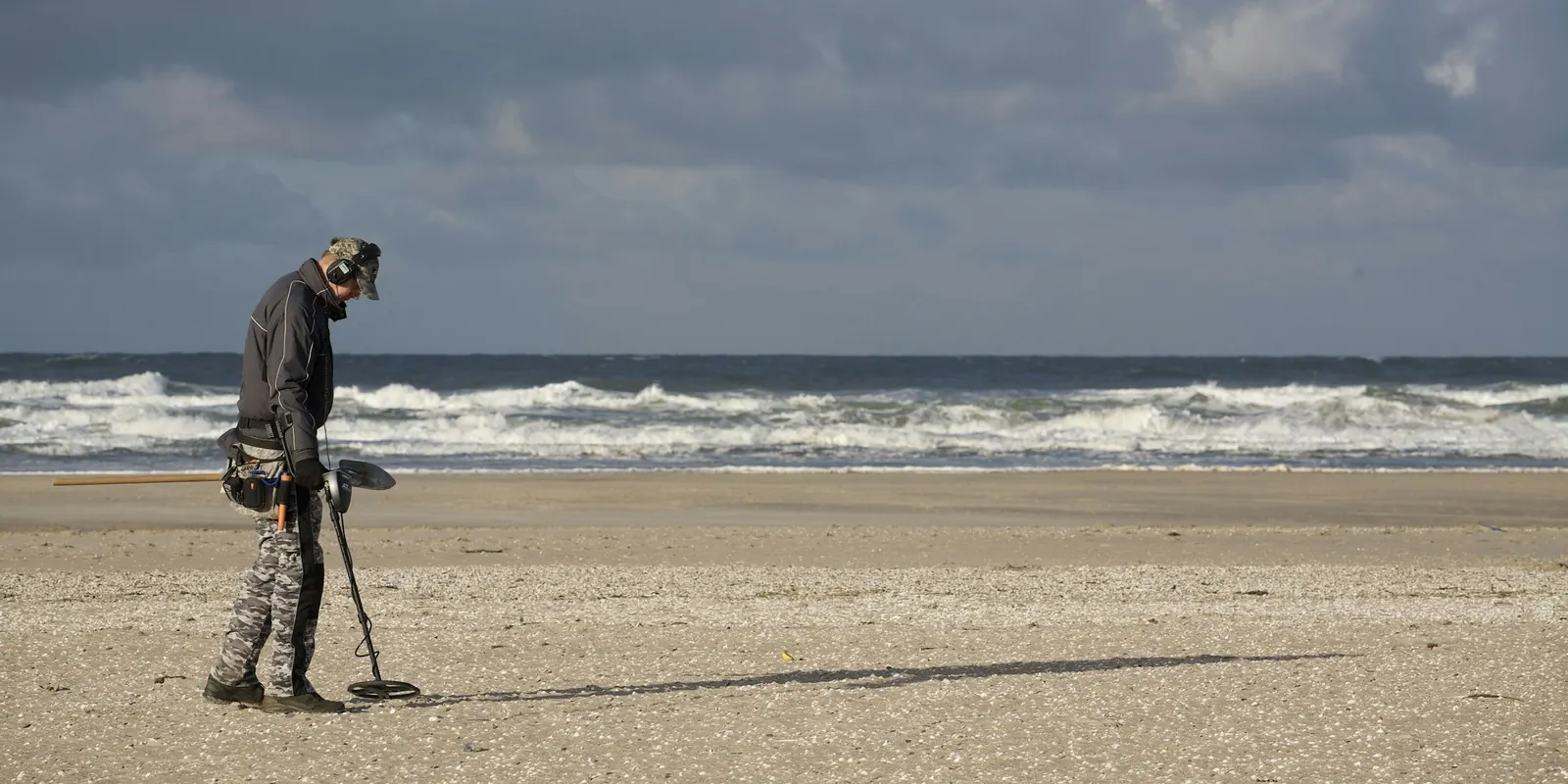
An old button has very little to say in a display case. In the hand of the person who just dug it up, it raises a dozen questions. Ask about the smallest thing they ever brought home. These gifts for metal detecting fans follow a day out: the detector, the dig and cleaning the find back home.
See also: History buffs Campers and hikers People who fish Gardeners
Before you buy
- Ask which detector they own before buying add-ons. Headphones, coil covers and spare coils only fit certain models.
- Beach hunters and park hunters dig with different tools. A scoop is useless on a lawn, and a sod cutter is slow in wet sand.
- Nokta also sells the Simplex Ultra in a set with wireless headphones, for more money. That set is worth it for busy parks or windy beaches, where the built-in speaker is hard to hear.
No gifts match. Try another search or increase your budget.
If you buy one thing
-
Nokta Simplex Ultra Waterproof Metal Detector, 11 Inch Coil
Light at 2.6 pounds, waterproof to 16 feet and folds to 25 inches, for lawns, plowed fields and the surf line. Offer to spend the first outing together, even if the best find is a bottle cap.
The detector 1 idea
No detector yet? Start here. Both of these work on grass, dirt and wet sand.
-
Minelab X-Terra Pro Waterproof Metal Detector
The other detector worth a hard look. It has simple Park, Field and Beach modes, a grip that buzzes on a target, and a small flashlight in the control box for dusk hunts. Pick it if they lean toward Minelab, the name many clubs swear by.
Budget: Splurge $100+ See it on Amazon: Minelab X-Terra Pro Waterproof Metal Detector (opens in a new tab)
Finding the exact spot 1 idea
The detector says where to dig. The pinpointer says where in the hole.
-
Garrett Pro-Pointer AT Waterproof Pinpointer
The orange wand nearly every detectorist ends up owning. The big detector finds the spot; this finds the coin inside the hole in seconds. That means smaller holes and fewer scratched finds. Waterproof to 20 feet.
Budget: Splurge $100+ See it on Amazon: Garrett Pro-Pointer AT Waterproof Pinpointer (opens in a new tab)
The dig 5 ideas
Lawns, fields and beaches each call for their own tool, plus something for hands and knees.
-
Lesche Digging Tool and Sod Cutter with Sheath
A short, thick steel blade with a serrated edge, made in the USA, that rides in a belt sheath. It cuts the clean three-sided plug that lets grass fold back and keep growing, which is how parks stay open to detecting.
-
Lesche Mini Sampson 18 Inch T-Handle Shovel
For plowed fields and woods, where targets sit deeper and roots get in the way. The T-handle gives real leverage, and the serrated blade chops through roots that would stop a garden trowel cold.
-
CKG Stainless Steel Sand Scoop for Metal Detecting
Beach hunters dig with a scoop, not a shovel. Sand and water pour out through the holes and leave the ring or coin behind. It is the tool for wet sand and the shallow surf, where most lost jewelry ends up.
-
Showa Atlas 370 Gloves, 4 Pack
Thin gloves dipped in nitrile that keep their grip and feel, so a small coin can still be picked out of cold, wet dirt. Four pairs means a dry spare always rides in the bag.
Budget: Under $25 See it on Amazon: Showa Atlas 370 Gloves, 4 Pack (opens in a new tab) -
ToughBuilt GelFit Rocker Knee Pads
Every find ends with kneeling. Gel pads with a rocking shell make the fiftieth dig of the day feel like the first, and they keep jeans dry on wet grass in the morning.
Carrying the finds 3 ideas
A place for keepers, a place for trash, and a record of where each one came from.
-
Garrett All Terrain Dig Pouch
A belt pouch with room for keepers on one side and trash on the other. Carrying out the pull tabs and foil matters: the next pass over the same lawn gets quieter, and the good signals stand out.
-
Plano StowAway 3600 Tackle Box
A clear box with movable dividers, made for fishing lures but just right for sorting finds by site or by day. The latch holds tight, so tiny rings and buttons stay put in the car.
Budget: Under $25 See it on Amazon: Plano StowAway 3600 Tackle Box (opens in a new tab) -
Rite in the Rain Mini Weatherproof Notebook, 3 Pack
Pocket notebooks with paper that takes pencil in rain and mud. Use one as a permission log: who said yes, which fields, and the date. Landowners notice that kind of care and say yes again.
Telling what it is 4 ideas
Most finds come up dirty and worn. These turn a lump of metal into a name and a date.
-
Ade Advanced Optics 10x Triplet Loupe
A proper glass loupe that stays sharp to the edges, for reading worn dates and mint marks right in the field. It folds into its own case and lives in a shirt pocket.
-
AWS Gemini-20 Milligram Scale
Weight tells silver from cheaper metal without a scratch. A silver quarter from before 1965 weighs 6.25 grams, and a newer one weighs 5.67. This reads to a thousandth of a gram and comes with weights to check itself.
-
The Official Red Book: A Guide Book of United States Coins, 2027
The yearly coin guide collectors have trusted for generations, now in its 80th edition. It pictures every U.S. coin with values by condition, so a dug coin goes from mystery to a name, a date and a rough worth.
-
The Metal Detecting Handbook by Mark Smith
A clear beginner's guide from an established publisher, not one of the thin self-published books that crowd this search. It walks through picking gear, reading signals and finding places worth searching.

Keeping and showing 3 ideas
Safe storage protects a coin's value, and a display gives the best finds a spot on the shelf.
-
BCW 2x2 Coin Flips, Half Dollar Size, 100 Count
Cardboard holders with a clear window, the standard home for a single coin. Fold, staple and write the site and date on the cardboard. The material is archival, so it will not stain a coin over the years.
-
Renaissance Wax Polish, 65 ml
A clear wax first made in the British Museum's labs. A thin coat seals cleaned relics such as buttons, buckles and old tools against damp air. Keep it away from valuable coins, which are best left as they came out.
-
Southern Star Riker Display Cases, 4 x 3 Inch, 3 Pack
Glass-topped boxes filled with acid-free padding, the way museums show small relics. Press in a season's best buttons and coins, close the lid, and the finds move from a drawer to a shelf.
How it comes together
- Get permission before the first swing. On private land, ask the owner and write down their name and the date. For city and state parks, read the rules or call the parks office.
- Charge the detector and pick the mode that fits the ground: park, field or beach. If it asks to ground balance, do it away from fences and power lines.
Swing the coil slowly from side to side, just above the grass, and step forward half a coil each pass. A real target beeps the same way when you cross it from two directions.
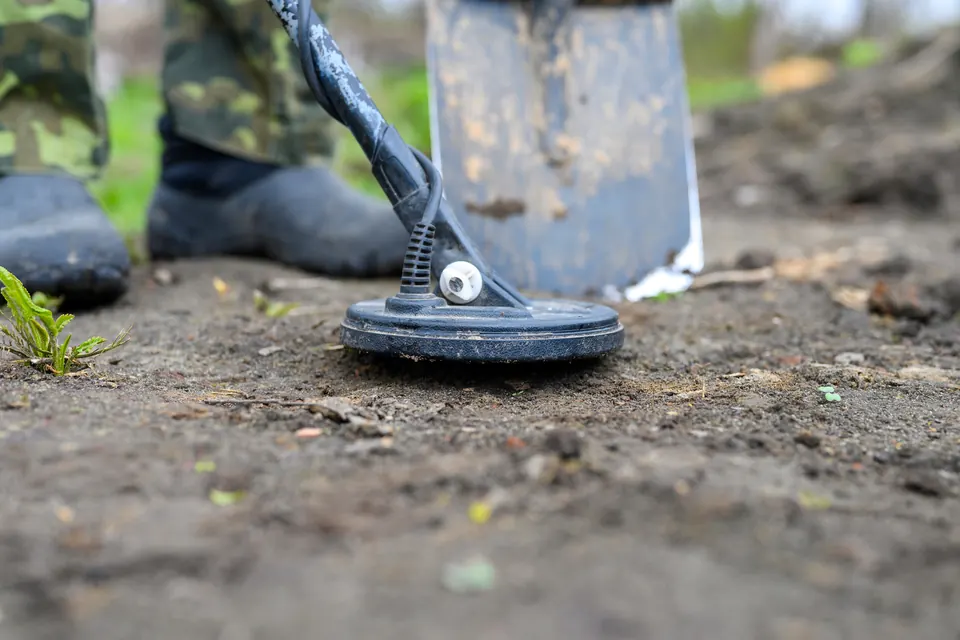
- Cut a neat U in the sod with the digger, three sides only, and fold the flap back on its hinge. Pile the loose dirt beside the hole, not across the lawn.
- Run the pinpointer over the hole, the dirt pile and the underside of the plug. It buzzes faster as it gets close, so the hole stays small.
Lift the find out by hand instead of prying with the blade. Keepers and trash both go in the pouch, then the dirt goes back, the flap closes, and a boot presses it flat.
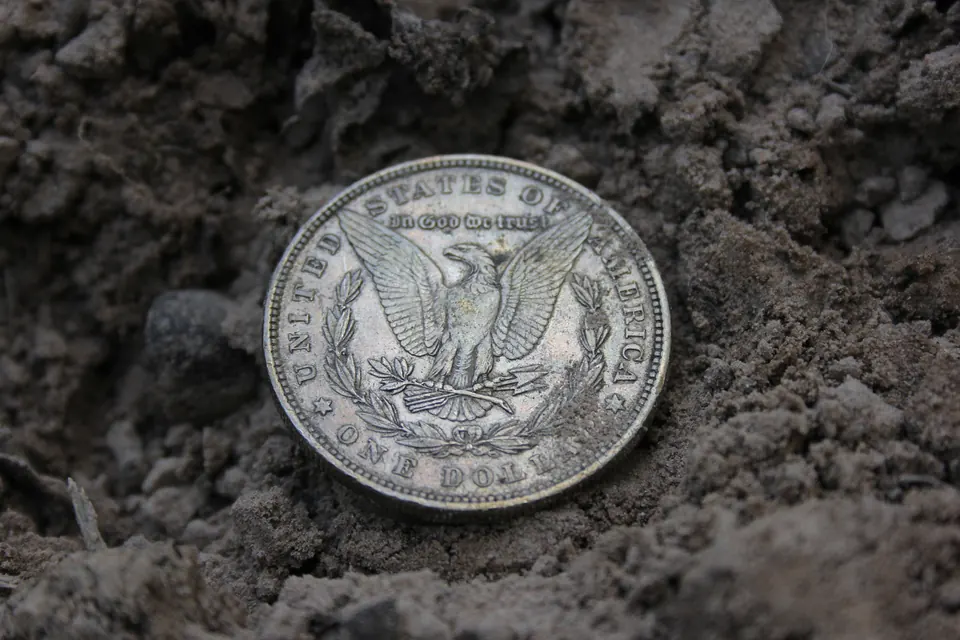
- At home, rinse finds in plain water and write down where each one came from. Weigh any coin that might be silver before deciding where it belongs.
Watch out for
- Metal detecting is banned in national parks. On other federal land, a law called ARPA makes it a crime to dig up artifacts more than 100 years old. Many state parks require a permit.
- Private land always needs the owner's okay, even a field that looks empty. Get it in writing when you can.
- Never clean an old coin with vinegar, a wire brush or a rock tumbler. Collectors pay for the original surface, and scrubbing can wipe out most of a coin's value.
- Fill every hole and carry out the trash. Open holes are the top reason towns close their parks to detecting.
- On old battlefields and farm dumps, leave shells or anything that looks like ammunition alone and call the police. In home yards, ask about sprinkler lines and buried cables before digging.