Gifts for Hot Sauce Fermenters
Someone who writes a date on a jar of peppers has made a small appointment with the future. Ask when they plan to taste it. Showing up for that first spoonful gives the batch a second witness. This guide to gifts for hot sauce makers follows a fermented batch from the cutting board to a sealed bottle.
See also: Home cooks Grillers Gardeners Home coffee roasting
Before you buy
- Ask what jars they use first. The airlock lids and glass weights here fit wide-mouth mason jars only, not regular-mouth ones.
- A pH meter is the gift that turns a hobby into sauce they can safely give away. Few beginners own one, and few think to buy it themselves.
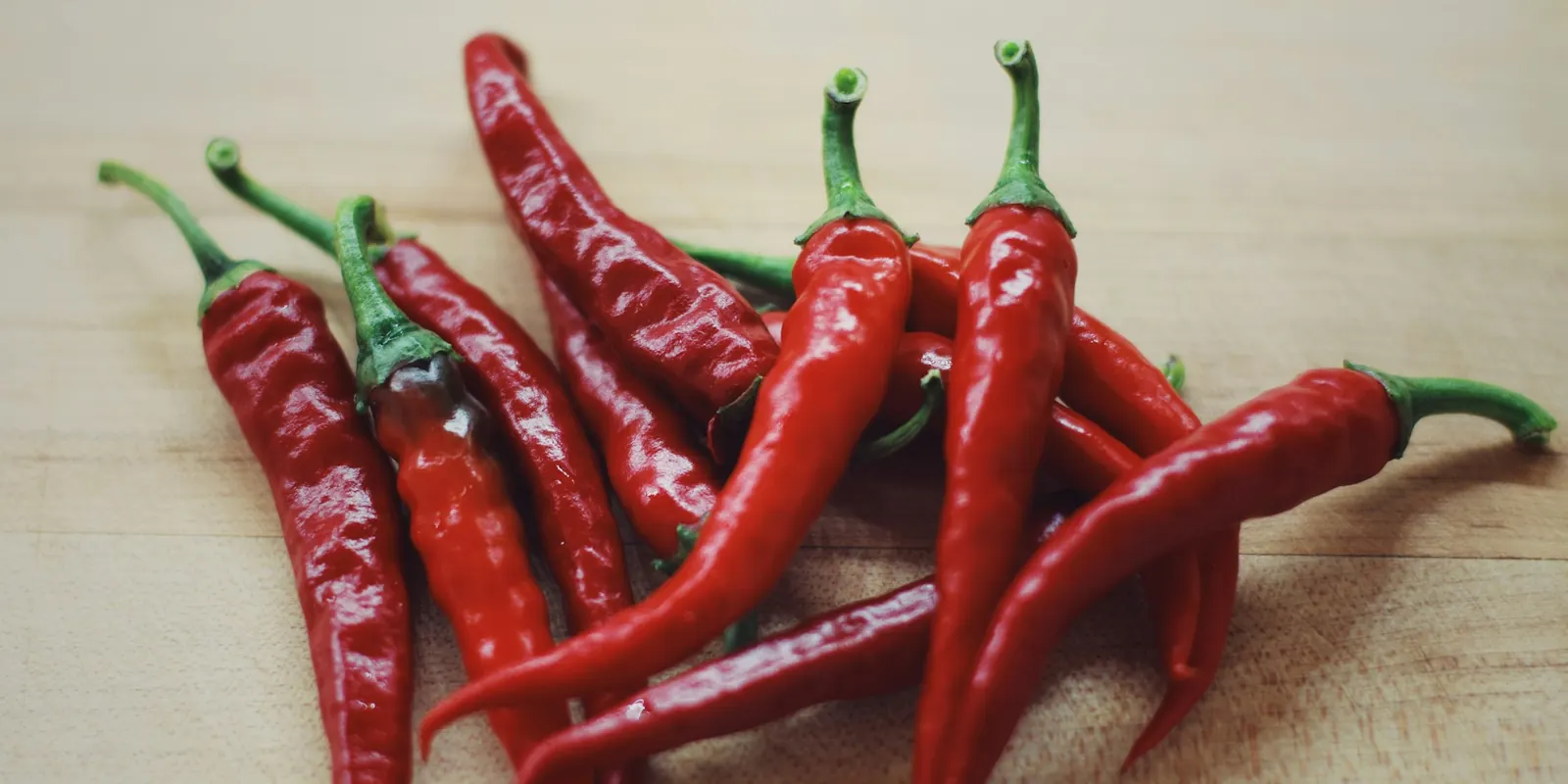
- Supermarket peppers work fine, so seeds are a bonus, not a need. Fresh peppers taste best in late summer, when farm stands sell them by the bag.
No gifts match. Try another search or increase your budget.
If you buy one thing
-
Masontops Complete Mason Jar Fermentation Kit
Four silicone airlock lids, four glass weights and a wooden tamper for wide-mouth mason jars: the whole setup most hot sauce makers use. Check that their jars are wide-mouth, and put tasting day on both calendars.
The jar 2 ideas
Peppers ferment for weeks, so the container has to keep air out and let gas escape.
-
Le Parfait Super Jar 1.5L, 3 Pack
French clamp-top jars with an orange rubber seal. The seal lets gas push out on its own, so a pepper ferment in one never needs burping. Lovely enough to sit on the counter for weeks.
-
TOMO Ceramic Fermentation Crock, 1 Gallon
For the maker who runs out of jars every summer. A water channel around the lid seals out air, and a full gallon of peppers makes enough sauce to bottle for the whole family.
Peppers and salt 4 ideas
Salt by weight is what keeps a ferment safe, so the scale matters as much as the peppers.
-
Seed Needs Habanero Seeds Variety Pack
Five habanero types, from orange to chocolate brown, to grow next spring. Habaneros are a favorite for fermenting because their fruity flavor survives the brine, and a few plants yield plenty.
-
Greater Goods Digital Kitchen Scale, 22 lb
Salt for a ferment is measured by weight, not by spoonful. This scale reads in single grams and holds a full jar of peppers and water, so the salt math is easy.
-
Fuzion Digital Pocket Scale, 500g x 0.01g
Thickeners like xanthan gum are used by the tenth of a gram, far below what a kitchen scale can read. A pocket scale this fine keeps a sauce from turning to slime.
-
GLOVEWORKS Industrial Black Nitrile Gloves
Hot pepper oil soaks into skin and stays for hours, then finds its way to eyes. A box of thick nitrile gloves is the least exciting gift here and the one they will thank you for first.
Blend and smooth 4 ideas
After the wait, the soft peppers become sauce.
-
Braun MultiQuick 5 Hand Blender
A stick blender goes right into the jar or pot, so there is one less thing to wash and less pepper spray in the air. Braun's blade guard keeps it from sucking onto the bottom.
-
Vitamix 5200 Blender
The blender that turns seeds, skins and garlic into a sauce smooth enough to pour from a narrow bottle. Many small hot sauce brands started on this exact machine.
Budget: Splurge $100+ See it on Amazon: Vitamix 5200 Blender (opens in a new tab) -
OXO Good Grips 6-Inch Double Rod Strainer
Pushing a blended mash through fine mesh gives a thin, bottle-ready sauce. The two rods hook over a bowl, which frees both hands for the spoon.
-
It's Just! Xanthan Gum, 8 oz
A tiny pinch stops a strained sauce from splitting into water and pulp in the bottle. One bag lasts years, since a batch needs well under a gram.
Budget: Under $25 See it on Amazon: It's Just! Xanthan Gum, 8 oz (opens in a new tab)
Test the acid 3 ideas
A sour sauce is a safe sauce, and a meter is the only way to know how sour.
-
Apera Instruments PH60 pH Pocket Tester Kit
The one tool that says whether a sauce is safe to keep. It reads to a hundredth of a point, it is waterproof, and the probe can be replaced when it wears out instead of buying a new meter.
-
Apera Instruments pH Calibration Buffer Kit, 4.00 and 7.00
A pH meter drifts, so it needs a quick check against these two liquids before each batch. Most people who own a meter run out of buffer and keep going on guesses.
-
ThermoWorks ThermoPop 2
Makers who give bottles away often heat the finished sauce before filling, which stops it from fizzing in the bottle. This quick thermometer shows when it is hot enough without a guess.
Bottle it 3 ideas
The part friends see, so it should look the part.
-
nicebottles Hot Sauce Bottles with Black Caps and Shrink Bands, 5 oz, 24 Pack
Real woozy bottles, the classic hot sauce shape, with drip-control inserts and shrink bands in the box. Twenty-four is about two big batches, which is a lot of gifts.
-
Norpro Stainless Steel Funnels, Set of 3
The smallest funnel fits the narrow neck of a woozy bottle. Steel will not stain orange the way plastic does after a few batches of habanero.
-
Wagner Spraytech HT1000 Heat Gun
A few seconds of hot air shrinks the band tight over each cap, so the bottles look store-bought and show if anyone opened them. A hair dryer is too weak for the job.
Waste nothing 1 idea
What stays behind in the strainer is worth keeping.
-
Cosori Food Dehydrator, 5 Stainless Steel Trays
The pulp left in the strainer is full of flavor. Dried overnight and ground, it becomes a fermented chili flake no store sells, and the trays can dry whole peppers from the garden too.
Budget: Splurge $100+ See it on Amazon: Cosori Food Dehydrator, 5 Stainless Steel Trays (opens in a new tab)
Read up 2 ideas
Two books that explain the why, not just the recipe.
-
Fiery Ferments by Kirsten K. Shockey and Christopher Shockey
Seventy recipes for hot sauces, pastes and spicy kimchis from two of the best known teachers in home fermenting. It explains why each step matters, so readers can invent their own.
-
The Noma Guide to Fermentation by René Redzepi and David Zilber
From the lab of a famous Copenhagen restaurant, with a full chapter on salt-fermented fruit and vegetables. Clear photos of every stage make it the book they will reach for after their first few batches.

How it comes together
Put on gloves, cut the stems off the peppers, and chop them roughly. Add a few cloves of garlic or some onion if they like.
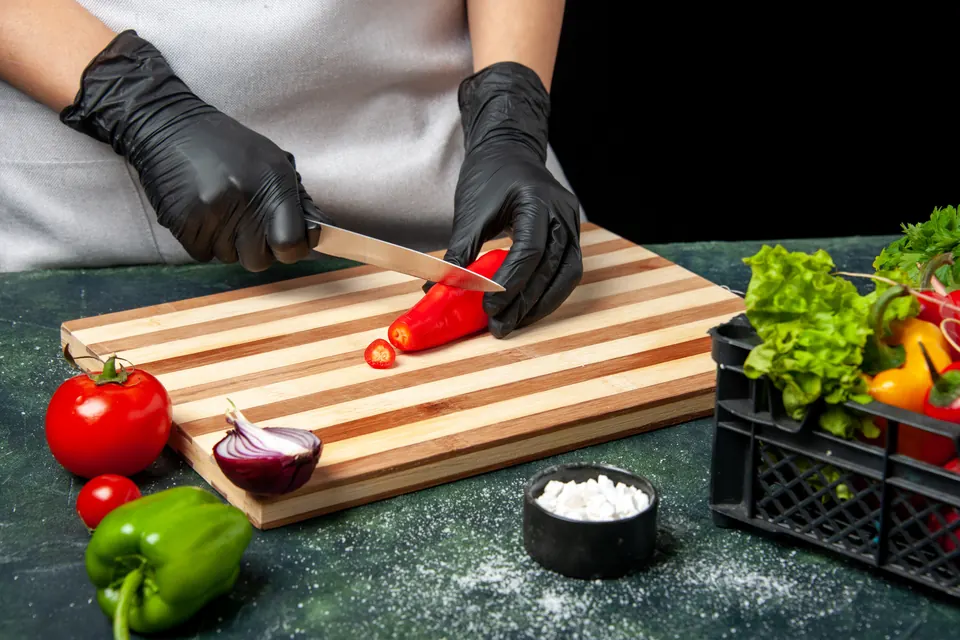
- Make a brine of about 3.5 percent salt: 35 grams of non-iodized salt in one liter of water. Iodized salt can slow the good bacteria.
Pack the peppers into a clean jar, pour in brine to cover, and press a glass weight on top. Anything poking above the brine can grow mold.
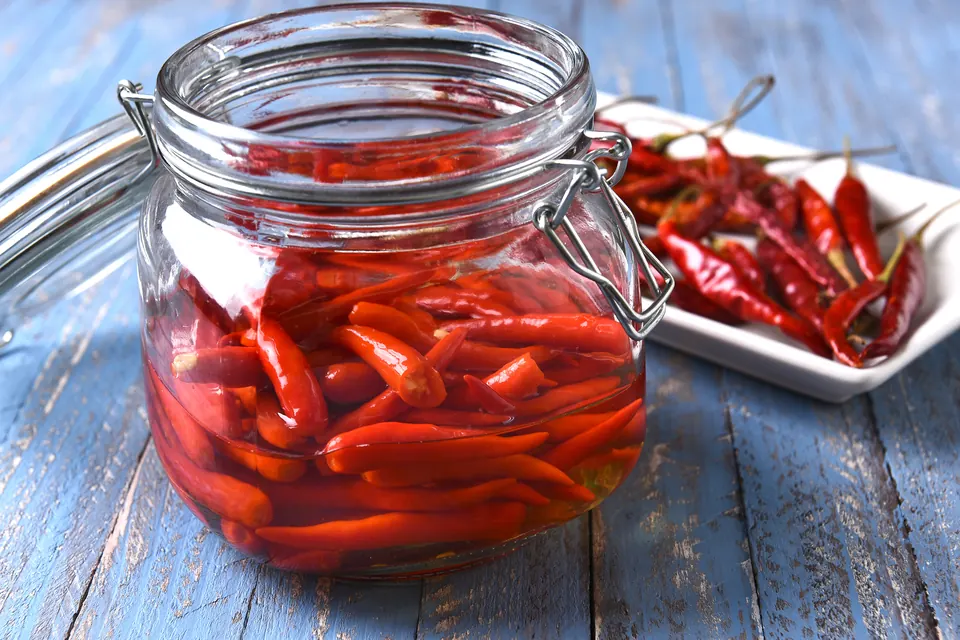
- Fit an airlock lid and leave the jar somewhere around room temperature, out of the sun, for one to four weeks. Cloudy brine and bubbles mean it is working.
- Drain the peppers but save the brine. Blend them with a splash of brine or vinegar until smooth, then press through a fine strainer for a thinner sauce.
- Calibrate the pH meter, then test the sauce. Aim for 4.0 or lower; anything above 4.6 is not safe to store, so add vinegar and test again.
- Funnel the sauce into bottles, cap them, label them with the date, and keep them in the fridge.
Watch out for
- White film on top of the brine is usually kahm yeast, which is harmless but tastes off; skim it. Fuzzy, colored spots are mold, and the batch should go.
- Unheated fermented sauce is still alive and can keep making gas. A sealed bottle left warm can push its cap off or spray when opened.
- Chopping and blending hot peppers fills the air with spicy fumes. Open a window, and keep faces away from the blender lid.
- Cheap pH strips are hard to read in a red sauce. A calibrated meter gives an honest number.
- Wide-mouth and regular-mouth mason jars take different lids. Check which jars they own before buying lids or weights.